
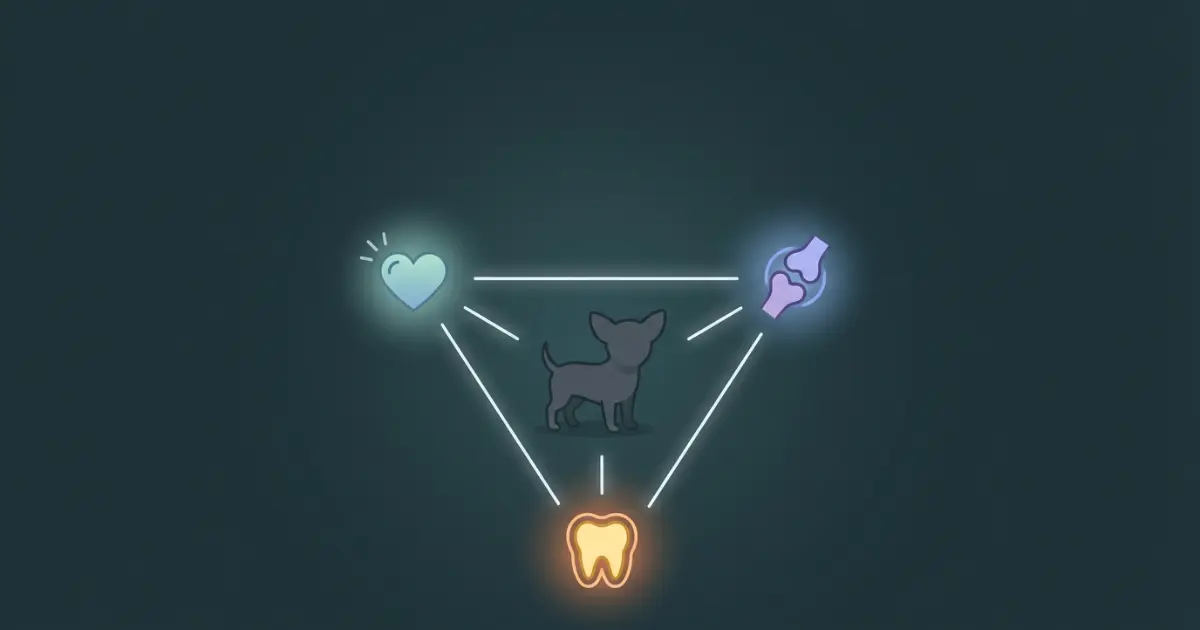
Three Health Issues That Chihuahuas Have
Table of Contents
Chihuahuas are beloved companions, but they’re prone to specific health problems. Understanding three health issues that chihuahuas have helps owners provide better care and catch problems early.
1. Dental Disease
Dental disease is the most common health problem in Chihuahuas. Their small mouths create overcrowding, trapping food and bacteria between teeth.
Warning signs include:
- Bad breath
- Red or swollen gums
- Difficulty eating
- Loose or missing teeth
- Yellow or brown tartar buildup
Without treatment, bacteria from infected gums enter the bloodstream and damage the heart, liver, and kidneys. Studies show that 80% of dogs develop periodontal disease by age three, with small breeds like Chihuahuas at highest risk.
Prevention steps:
- Brush teeth daily with dog-safe toothpaste
- Provide dental chews approved by your vet
- Schedule professional cleanings annually
- Monitor for changes in eating habits
2. Patellar Luxation
Patellar luxation also is one of the Three Health Issues That Chihuahuas Have, itoccurs when the kneecap slips out of position. This condition affects up to 20% of Chihuahuas and ranges from mild to severe.
Severity grades:
- Grade 1: Kneecap slips out occasionally, returns on its own
- Grade 2: Kneecap dislocates more frequently, causes intermittent limping
- Grade 3: Kneecap stays out most of the time, noticeable lameness
- Grade 4: Kneecap permanently displaced, leg cannot straighten
Common symptoms:
- Sudden limping or skipping steps
- Holding one leg up while walking
- Difficulty jumping or climbing stairs
- Yelping when the knee pops out
Mild cases may only need weight management and joint supplements. Severe cases require surgery to realign the kneecap and prevent arthritis. Early detection improves outcomes significantly.
3. Hypoglycemia
Hypoglycemia, or low blood sugar, is dangerous for Chihuahuas, especially puppies and adults under four pounds. and difinetly one of the Three Health Issues That Chihuahuas Have ,Their fast metabolism burns glucose quickly, and small meals don’t provide lasting energy.
Risk factors:
- Puppies under six months old
- Very small or teacup Chihuahuas
- Stress or excessive exercise
- Missed meals or inadequate feeding
- Illness or infection
Emergency symptoms:
- Weakness or lethargy
- Trembling or shaking
- Confusion or disorientation
- Seizures
- Loss of consciousness
Immediate treatment: Rub honey or corn syrup on gums and contact your vet immediately. Prevention requires feeding small, frequent meals throughout the day—at least three to four meals for puppies and small adults.
When to See a Vet Immediately
Recognizing three health issues that chihuahuas have means knowing when to seek emergency care.
Call your vet right away if you notice:
- Seizures or collapse
- Inability to walk or stand
- Severe lethargy or unresponsiveness
- Refusal to eat for more than 12 hours
- Continuous crying or signs of pain
- Bleeding gums or loose teeth
- Sudden behavioral changes
For hypoglycemia, administer sugar and contact your vet even if symptoms improve. For severe limping from patellar luxation, avoid letting your dog jump or run until examined. Dental infections can escalate quickly, so any facial swelling requires same-day attention.
How These Health Issues Can Affect Chihuahua Behavior
Understanding three health issues that chihuahuas have helps explain behavioral changes that might otherwise seem puzzling.
Dental disease impacts:
- Irritability when touched near the face
- Reluctance to play with chew toys
- Decreased appetite or selective eating
- Increased aggression due to chronic pain
Patellar luxation causes:
- Reduced activity levels
- Anxiety about jumping or playing
- Protective behavior toward affected leg
- Sleep disturbances from discomfort
Hypoglycemia leads to:
- Sudden personality changes
- Unusual clinginess or withdrawal
- Confusion or seeming “spacey”
- Aggressive responses when handled
Pain and discomfort make Chihuahuas defensive or withdrawn. Owners often mistake these behaviors for stubbornness or poor training when medical issues are the real cause. Regular vet checkups catch problems before they affect quality of life.
Preventive care for all three conditions:
- Maintain healthy body weight
- Feed high-quality, appropriate portions
- Schedule annual vet exams and dental cleanings
- Monitor daily for behavior or mobility changes
- Keep emergency supplies on hand (honey for hypoglycemia)
Being informed about three health issues that chihuahuas have empowers you to provide the best possible care for your small companion.
If you’d like to explore a closely related topic, you may also find our other Chihuahua articles helpful:
Chihuahua Health Issues: Common Conditions, Symptoms, and Prevention
Chihuahua Behavior Problems: 7 Common Issues and Practical Solutions
Chihuahua Personality: Traits, Temperament & What Owners Should Expect
Apple Head Chihuahua: Your Complete Guide
Top 10 Chihuahua Mix Breeds That Are Taking Over TikTok in 2025