Crate Training Your Dog: 9 Easy Steps for Success
Look, I get it. When I first saw my neighbor setting up a crate for their new puppy, I thought they were being pretty harsh. It honestly looked like doggy jail to me. But after dealing with my own rescue dog’s separation anxiety—and watching him destroy half my living room furniture—I realized I might’ve been completely wrong about crate training.
It turns out dogs actually love having their own space. My golden retriever, Max, now practically sprints to his crate when he’s tired. It’s his safe place, his bedroom, and his favorite spot to relax.
🏠 What This Method Is Really About
A lot of people misunderstand this approach. It’s not about locking your dog away or forcing them to tolerate confinement. The goal is to give your dog a secure, predictable place where they can relax and feel safe.
When done correctly, crate training helps reduce anxiety, improves behavior, and gives dogs a space they can retreat to when they feel overwhelmed.
A professional trainer once told me dogs that learn this skill early often handle stress far better than dogs who don’t have a designated safe space. From my experience, that’s absolutely true.
🧱 Step 1: Choose the Right Crate
The first mistake I made was buying the cheapest crate I could find. Big mistake. Max bent the door within weeks and treated it like a chew toy.
There are two solid options:
- Wire crates for dogs that like to observe their surroundings
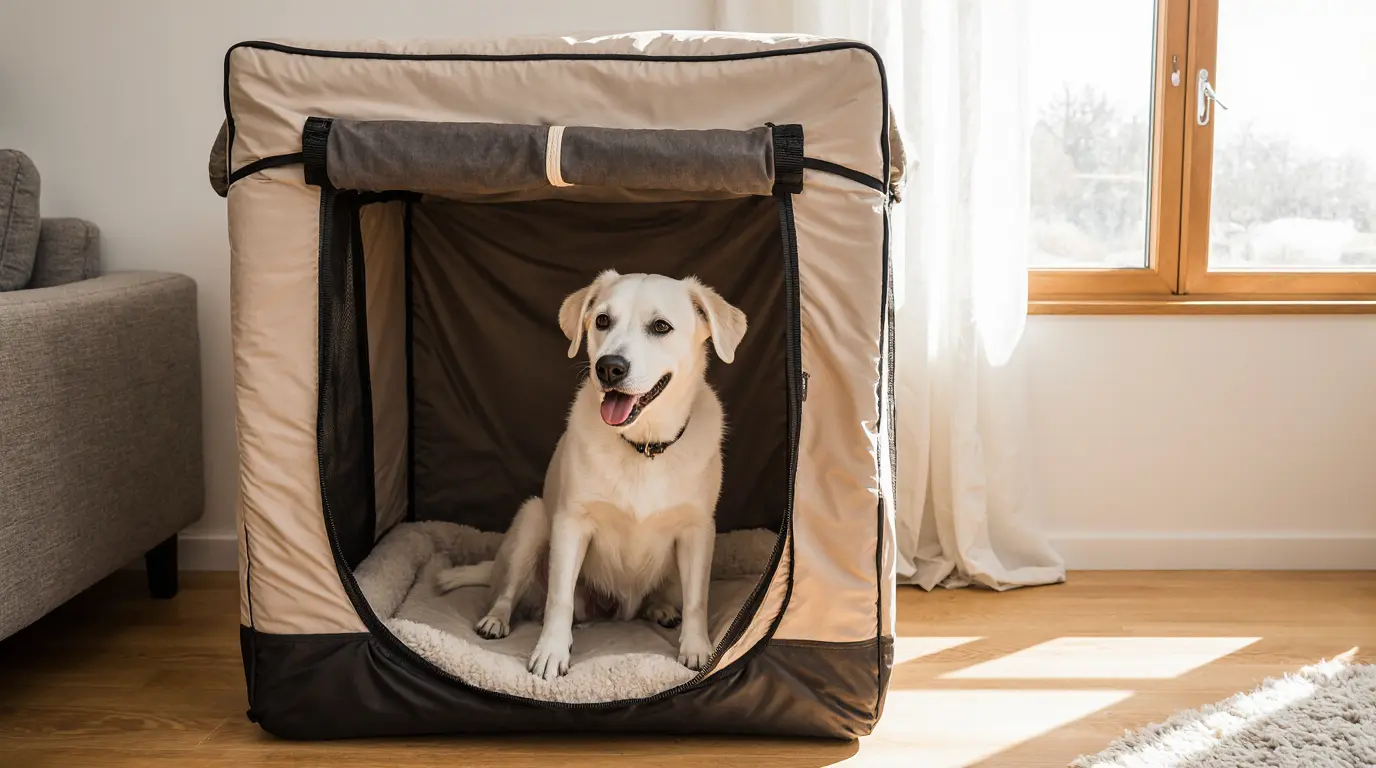
- Enclosed crates for dogs that get overstimulated
Sizing matters more than people think. A crate should be large enough for your dog to stand, turn around, and lie down comfortably—but not so large that they can use one corner as a bathroom.
🕰️ Step 2: Start When Your Dog Is Calm
Timing plays a huge role in crate training success.
Avoid introducing the crate when your dog is overexcited. The best moments are:
- After a walk
- After playtime
- In the evening when energy is lower
Start with very short sessions—ten minutes is enough at first. Building positive associations slowly prevents frustration and fear.
🛏️ Step 3: Keep the Crate Simple at First
I learned this the hard way. Fancy bedding sounds nice, but early on it often becomes a chew toy—or worse, a bathroom.
Most dogs are perfectly fine with a simple crate mat. Once your dog shows they respect the space, you can add comfort later.
🧠 Step 4: Make the Crate a Positive Place
This is where crate training really starts to work.
Every time your dog enters the crate, something good should happen:
- A food-stuffed toy
- A favorite chew
- Calm praise
I used frozen KONGs, and they made a huge difference. Max began associating the crate with relaxation instead of isolation.
⏱️ Step 5: Don’t Overuse the Crate
A crate is a tool—not a solution to everything.
- Exercise
- Social interaction
- Bathroom breaks
Puppies, especially, have limits. Respecting those limits is essential for healthy crate training and long-term success.
🎾 Step 6: Turn It Into a Game
Once your dog is comfortable, make the crate part of playtime. Toss toys inside, hide treats, and encourage exploration.
When your dog chooses to go inside on their own, you know you’re doing things right.
⚠️ Step 7: Follow Basic Safety Rules
No collars. No tags. No accessories.
Even simple items can become dangerous in a confined space. Removing them before crating is non-negotiable.
📈 Step 8: Increase Time Gradually
Progress should be slow and intentional.
Move from:
- 30 minutes
- to 45 minutes
- to one hour
Small increases help your dog adjust without stress. Watching their behavior gives you better feedback than any rigid schedule.
🧘 Step 9: Patience Is the Real Secret
Here’s the truth: crate training takes time. Sometimes weeks. Sometimes months.
There will be progress, setbacks, and moments where you question everything. That’s normal. Dogs don’t learn in straight lines.
But when it finally clicks, the payoff is huge—a calmer, more confident dog with a space they truly love.
🎯 Final Thoughts
At its core, crate training isn’t about control. It’s about trust.
When done correctly, it gives your dog comfort, structure, and emotional security. Stick with it, stay patient, and the results will come.
You might also like these articles:
Crate Training Schedule for Puppies
Crate Training a Puppy at Night: How to Stop Whining and Get a Full Night’s Sleep